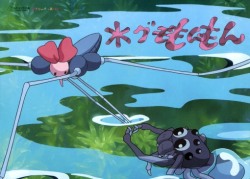
二週間前にわたしのかのじょはカルネゲィホールヘつれて行ってくれました。三月から四月までカルネゲィホールでJapanNYCのエベントがありました。いろいろですてきな日本のミュージュシャンをひきました。ピアノやジャズやこてん音楽のコンサートがありましたと思います。しかし、わたしたちはやおみやざきの短い映画をみに行きました。この映画はとてもたいせつです。日本とニューヨークしか見られませんからです。そして、ニューヨークでショイングが二つ、三つだけあったと思います。映画が二つありました。一ばんの映画は「やどさがし」でした。映画で、ぜんぜん話がありませんでしたが、おとがたくさんありました。おとは人のこえだったから、とてもおもしろかったです。二ばんの映画は「みずぐももんもん」でした。とてもかわくてきえりでした。みずぐもについてぜんぜんしりませんでした。
みずぐもはあわでうちを作ります。みずの上へ行って、あわを持っていって、みずのしたへ行くと、うちを作ります。映画のみずぐもの「もんもん」はとてもかわいかったですが、ほんとうのみずぐもはちょっと。。。
ジンジャちゃんはわたしのしいにゅうですよ!
Tuesday, April 12, 2011
Wednesday, April 6, 2011
Wednesday, March 23, 2011
Composition #3
わたしのいちばん好きな旅行。
「あなたの思い出はなんですか?」はむずかしいしつもんだと思います。わたしは多くのところへいったことがあるからです。でも、わたしはりょうしんといっしょうに行く旅行がいちばん好きです。四年前に、りょうしんとすごいところへ行きました。二千七年のクリケトワールドカップはグレナダでありました。わたしの父はクリケトをして、大好きだと思います。多くの国はクリケトがたいせつなスポーツだから、父はおもしろいいところへクリケトを見に行きます。グレナダは小さくてとてもきれいなしまでした。グレナダにつく前に、小さいハリケーンがあって、たいへんでしたが、すぐにてんきがよくなりました。わたしたちがとまったうちはみじかい山の上にあるから、まいにち小さいバスで町へ行かなければなりませんでした。山がたくさんあるから、みちはせまくて、ちょっとこわかったです。父は友達にあって、クリケトをしたり、ワールドカップのしあいを見たりしました。しかし、わたしと母がいっしょうにグレナダであそびました。母とビーチでしんせんでおいしいくだものを食べました。すごいジャンガルであるいて、いろいろへんなどうぶつやしょくぶつをみました。わたしはせいぶつが好きだから、とてもおもしろかったです。そして、父はワールドカップのしあいへつれていてくれました。プロクリケトを見ることがありませんでした。しあいはながかったですが、見るの人はとても元気だったからわたしがぜんぜんつかれませんでした。とても楽しかった旅行です。行ったことがあるところで、グレナダがいちばんおもしろかったです。
Thursday, March 3, 2011
ワンワンワン!
Courtsey of http://www.deliverfreedom.com/blog/wp-content/uploads/2009/11/happy-dog.jpg
今週、コミュニケーションではなしましたね。私はじゅういになりたいだ、いつもどうぶつをかんがえている。私のいちばん好きなかがくのばんぐみのホームページに犬のコミュニケーションのテストがありました。みじかくておもしろいテストです。
http://www.pbs.org/wgbh/nova/nature/meaning-dog-barks.html
私は犬がとても好きですよ!うちに、小さい犬のジンジャがありますが、テストはあまりかんたんじゃありまえん。
日本語では、犬の音(おと)は「ワンワン」でしょう?にほんごでほかのおとのことばをしりません。えいごは「bark」や「woof」や「ruff」や「yip」がありますね。でもにほんごのほうがアメリカよりたくさんonomatopoeiaがありますね。
犬のほえごえ(Bark)をよくしっていますか?わたしはいぬをもっているひとのほうがじょうずだとおもいますが、だれもが少しわかることができます。
Monday, February 21, 2011
Composition #1: REVISED
ゆかさんへ、
おげんきですか。ゆかさんはすぐニューヨークへあそびに来ますね。ニューヨークはたくさんおもしろいところがあります。ストランド本やをしっていますか?とてもゆうめいな本やですが、にぎやかじゃありません。きれいで古くておもしろい本をうります。ユニオンスクエアにありますから、コロンビア大学からちかてつでいかなければなりません。大学から一のちかてつにのって、タイムススクエアでちかてつをのりかえて、十四ちょうめでおります。ユニオンスクエアはおいしい食べ物や大きいみせやアーティストがたくさんあります。バッテリーパークヘ行ったことがありますか?マンハッタンのいちばんみなみのさきです。きれいでしずかなこうえんです。ゆかさんのしゅみはきねんのしゃしんをとることですね?バッテリーパークはいろいろなきねんを見ることができます。そこからじゆうのめも見ることができますね。そして、スタッテンアイランドへどうぶつえんとしょくぶつえんをみにいくことができます。ふねで行かなければなりません。どうぶつえんはちいさいですが、しょくぶつえんは大きくなりました。ニューヨークへ行ってから、わたしに電話をかけてください!
ジリアン
おげんきですか。ゆかさんはすぐニューヨークへあそびに来ますね。ニューヨークはたくさんおもしろいところがあります。ストランド本やをしっていますか?とてもゆうめいな本やですが、にぎやかじゃありません。きれいで古くておもしろい本をうります。ユニオンスクエアにありますから、コロンビア大学からちかてつでいかなければなりません。大学から一のちかてつにのって、タイムススクエアでちかてつをのりかえて、十四ちょうめでおります。ユニオンスクエアはおいしい食べ物や大きいみせやアーティストがたくさんあります。バッテリーパークヘ行ったことがありますか?マンハッタンのいちばんみなみのさきです。きれいでしずかなこうえんです。ゆかさんのしゅみはきねんのしゃしんをとることですね?バッテリーパークはいろいろなきねんを見ることができます。そこからじゆうのめも見ることができますね。そして、スタッテンアイランドへどうぶつえんとしょくぶつえんをみにいくことができます。ふねで行かなければなりません。どうぶつえんはちいさいですが、しょくぶつえんは大きくなりました。ニューヨークへ行ってから、わたしに電話をかけてください!
ジリアン
Thursday, February 17, 2011
About Communication
マヤさんたちといっしょうにCommunicationについて話しました。これは私たちのイデアです。
Here is our brief definition of the term: communication = gaining a broader/deeper understanding of other individuals and cultures through exchange of ideas through some method of transmission
This is what I hope to accomplish via our upcoming video project:
Learn new vocabulary from our own research and the projects of others
Reinforce my knowledge of sentence structure and grammar patterns
Sharpen my listening skills through hearing known patterns reinforced in other students' work
Learn through experience how to best communicate in Japanese
I also think the project will help me practice natural speaking - cadence, syllabic emphasis,
natural pronunciation, and compound sentence formation
Regarding our own specific project in general, I am sure I will learn more about New York city's history, Japanese conceptions of American cities, and Japanese cities themselves.
Here is our brief definition of the term: communication = gaining a broader/deeper understanding of other individuals and cultures through exchange of ideas through some method of transmission
This is what I hope to accomplish via our upcoming video project:
Learn new vocabulary from our own research and the projects of others
Reinforce my knowledge of sentence structure and grammar patterns
Sharpen my listening skills through hearing known patterns reinforced in other students' work
Learn through experience how to best communicate in Japanese
I also think the project will help me practice natural speaking - cadence, syllabic emphasis,
natural pronunciation, and compound sentence formation
Regarding our own specific project in general, I am sure I will learn more about New York city's history, Japanese conceptions of American cities, and Japanese cities themselves.
Wednesday, February 2, 2011
ね、しってる?
わたしの好きな物です!
みなさんはイモジンヒープをしっていますか?歌手で、イモジンヒープがいちばんすきです!その人のコンサート二つへ行きました。そして、へやにポスターがあります。その歌は”ヘッドロック”です。好きな歌ですよ。そしてビデオはおもしろいです。ヒープさんはかみがかっこいいですね。メセージは "Why are you so hung up on past relationships? You need to get over it (and be with me!)"...I think...
ハロルドとモードをしっていますか?それはおもしいろくてとてもかわいいえいがです。くらいきげきです。ハロルドはしょうねんです。モードはろうじん(old lady)です。メセージは ”せいかつをあいして。” それはにほんのポスタですが、アメリカのえいがです。
トレーラです。(Skip ahead to 1:10 to see the Japanese trailer ^0^)
そして、たいやきをしっていますか?わたしはたいやきがだいすきです!魚はほんとうに魚じゃありません。パンケーキです。魚の間にあずき(red bean)があります。でも、マンハッタンのいいたいやきのレストランをしっていません。みんなさんはしっていますか?かわいいですね?
いま、たいやきがほしいです。。。
みなさんはイモジンヒープをしっていますか?歌手で、イモジンヒープがいちばんすきです!その人のコンサート二つへ行きました。そして、へやにポスターがあります。その歌は”ヘッドロック”です。好きな歌ですよ。そしてビデオはおもしろいです。ヒープさんはかみがかっこいいですね。メセージは "Why are you so hung up on past relationships? You need to get over it (and be with me!)"...I think...
ハロルドとモードをしっていますか?それはおもしいろくてとてもかわいいえいがです。くらいきげきです。ハロルドはしょうねんです。モードはろうじん(old lady)です。メセージは ”せいかつをあいして。” それはにほんのポスタですが、アメリカのえいがです。
トレーラです。(Skip ahead to 1:10 to see the Japanese trailer ^0^)
そして、たいやきをしっていますか?わたしはたいやきがだいすきです!魚はほんとうに魚じゃありません。パンケーキです。魚の間にあずき(red bean)があります。でも、マンハッタンのいいたいやきのレストランをしっていません。みんなさんはしっていますか?かわいいですね?
いま、たいやきがほしいです。。。
Sunday, January 23, 2011
しんごままのおはROCK
I am now able to understand about 80% of this song! Another classic 'what the heck is this' moment from Japan. WHY is James Brown in this video????? Anyway, it's great ^-^/
Friday, January 21, 2011
わたちのふゆやすみ!
こんいちはみんあさん!ふゆやすみはしずかでした。よかったでした!おばさんたちはアラバマからきました。めったにきませんから、うれしかったです。きょうねん、わたしのいとこのダグはにほんへいきました。いま、こうこうでにほんごをべんきょうしています。ふゆやすみににほんごがあまりわかりませんでしたから、にほんごではなしませんでした。しかし、まもなくダグくんににほんごでてがみをかきますね!ふゆやすみにダグくんとダグくんのいもうとちゃんのルーシとあそびました。アラバマにすんでいますから、わたしのいとこはニューヨークにめったにいきません。ダグくんとルーシちゃんとチャイナタウンへアイスをたべにいきました。さむかったでしたね!それから、キノクニヤのほんややロッカフェーラセーンタへいきました。
Sunday, December 12, 2010
オモダカ!
きょうねん、バウリーボールムのジャパンナイトへいきました。日本のロックコンサートでした。バンドが3つありました。バンドは日本からニューヨークまでコンサートをしに来ました。とてもたのしいでした!バンドで、OMODAKAがいちばんすきでした。
I have been listening to the one CD of theirs that I bought at the concert over and over because I could never find anything of theirs in the United States. However, they seem to be getting more popular in the states now! The guy takes traditional Japanese folk music ("minyo") and remixes it using a synthpad and videogame soundboards. The concert was weird because it was basically a guy in a mask and traditional Japanese clothing and a woman singing through a television screen. Very cool.
このうたがわたしのいちばんすきです!”梅は咲いたか” です。The video is extremely bizarre and too trippy for me, but the song is awesome!The original song is an example of the type of music that was popular in big cities during the Edo period (called "hauta"), that evolved out of the tradition of Kabuki theater.
Sunday, December 5, 2010
さくばん 3
二十ねんごのわたし:
わたしはけっこんしたいですから、かぞくがあります。こどもがたくさんほしくないです。いぬもほしいです。ちいさいかぞくですが、とてもしあわせでしょう。わたしはじゅういでしょう。ニューヨークにしごとがたくさんありますから、ここにいます。ブルックリンがすきです。おおきいいえがほしくないです。アパートはいいです。いっかげつにコネチカットへりょうしんにあいにいきます。せいかつはおもしろいです。そしてたのしいです。
Wednesday, December 1, 2010
Katakana Analysis Final Draft
ビシャンバシャン, "splish, splosh" , Children's Book“泳げカメレオンくん” / “Chameleon Swims”
マグネシウム, "Magnesium", scientific journal, Tokyo Kagaku Kaishi
The modern Japanese language consists of three types of script: kanji, hiragana, and katakana. Among the three, katakana seems to be the most mysterious—while it is relatively easy to define the usage of kanji and hiragana, Japanese textbooks have found it very difficult to settle on a clear definition of katakana usage. In this analysis, I will investigate the origins and uses of katakana and look at its use in two specific circumstances.
Early Japanese writing consisted entirely of kanji adopted from Chinese around the 5th century. Over time, the language evolved by assigning different readings to these Chinese characters, creating the –on and –kun readings that still exist in the Japanese language today. Katakana and hiragana, however, did not develop until the onset of the Heian period, around the 9th century. At this time, the study
of Buddhist texts written in Chinese was becoming popular among monks. Katakana originally developed as a sort of mnemonic shorthand for writing complex characters quickly and in a more simplified manner. Hiragana, which is used to write the same mnemonic alphabet and looks very similar to katakana, also developed at this time. Hiragana was regarded as a more aesthetically pleasing sort of cursive script. Of course, all three scripts are still used today, but one can arguably observe an ever-increasing amount of katakana being used in modern texts (Igarashi 16-22)
Upon considering the uses and function of Katakana in modern Japanese writing, one finds a number of opinions regarding the definitive use of the script. Indeed, a variety of definitions can be found across Japanese language textbooks. Yuko Igarashi presents what seems to be the most widely excepted definition in her paper entitled “The Changing Role of Katakana in the Japanese Writing System:
Processing and Pedagogical Dimensions for Native Speakers and Foreign Learners”. The description involves the categorization of Japanese words into three distinct groups, each of which is generally associated with one of the three scripts. The first of two of these categories, “kango”, which includes Sino-Japanese words (words derived from Chinese), and “wago”, or Japanese native words, generally correspond respectively to kanji and hiragana. The third class of words, “gairago”, are thought of as ‘loanwords’ to the Japanese language. However, katakana is unique in the sense that it can be used unconventionally in the place of both wago and kango for the sake of emphasis, onomatopoeia, or as an indicator of a unique speech pattern unlike the in the rest of the text (Igarashi iii-iv).
The first phrase that I chose came from a children’s book: “ビシャン、バシャン” (“splish, splosh”). Onomatopoeic phrases like it are usually written in katakana, and there are certainly a lot of examples in the list that the sum of our classes has generated. It is not difficult to understand why onomatopoeias would be written in this special script - katakana separates them from the rest of a sentence to the same effect as capitalizing, italicizing, or adding an exclamation mark would do in English. Indeed, this particular use of katakana is often compared to italicization. The katakana script also indicates text that could have been said in an unusual way, for example, in a more elevated tone, different from the normal speech that borders it. In Japanese, the text not only differs by slant or boldness, but also by alphabet, making it stand out even more. Japanese contains an enormous amount of onomatopoetic words, and they certainly play a more prevalent role in the Japanese language than they do in English and most other languages.
The definition common to most textbooks, it seems, involves, at the least, the description of katakana as the script used for loanwords(aside from those from Chinese) and foreign names. This is probably because these are the major usages of katakana, especially in contemporary writings. It is evident that there is an ever-increasing amount of gairago finding its way into modern Japanese, and for each of these words, a Japanized version emerges, written in katakana. The list is extensive, as evidenced by the dozens of different loanwords that have been donated to our class list. What I found interesting was that the scientific journal article that I found, from Tokyo Kagaku Kaishi, presented the words for the elements in katakana (i.e. magnesium = マグネシウム, calcium = カルシウム, etc.) as opposed to kanji. The names of minerals and scientific names of plants and animals are written in katakana, which often come from Latin. If one looks at a timeline of the discovery of the elements, one finds that most elements discovered (roughly) before the 13th century generally have their own in kanji script (i.e., gold (金), and copper (銅)), whereas most of the more recently discovered elements, certainly those discovered after the 18th century, such as uranium – “ウラン” (1841), magnesium (1808), calcium (1808), etc. are written in katakana. The elements discovered between the 13th and 18th century are a mixed bag, with the most important written in kanji, i.e. hydrogen, oxygen, nitrogen, and chlorine (all discovered during the 1760s-1770s). I am not sure what exactly to attribute this phenomenon to except perhaps that the relative obscurities of some elements to others (for example, oxygen is far more often referred to than, say, dysprosium, therefore it would make sense to assign it its own kanji which will be recognized often). Whatever the cause may be, I think that this example illustrates perhaps the most important point regarding modern katakana usage. Katakana has evolved along with the spread of knowledge and the increasingly globalized academic world.
Outside of the academic world, katakana usage can often seem quite arbitrary. In many situations, the writing of a word is equally acceptable in katakana versus one of the other scripts. I’m sure this is why textbooks have difficulty coming up with a set definition. They may want to prevent readers from assuming that the rules regarding katakana usage are set in stone.
Links to sources:
“The Changing Role of Katakana in the Japanese Writing System:
Processing and Pedagogical Dimensions for Native Speakers and Foreign Learners
Tuesday, November 16, 2010
Literary Work - Ōsanshōuo
Fullview for better reading ^^
いえ=home
ながれる=flowing
うで=arms
かお=face
ゆうじん=buddies
しっぽ=tail
Katakana words used: オオサンショウウオ、ハンサム
I wrote the word "Ōsanshōuo" in katakana for two reasons: 1) The name of the salamander seems to be conventionally written in katakana when it is not written in kanji, although I'm not sure why this is, and 2) because the speaker is addressing the salamander as if it were a person = for emphasis
I used the word "hansomu" because it sounded cute in context, since I imagined the salamander to be a little guy salamander. Of course, it is written in katakana because it is a foreign lonaword.
Hope you liked it! (^o^)/
Wednesday, November 10, 2010
Composition 2
やまださんへ、
わたしはロレンスジリアンです。はじめまして。どうぞよろしくおねいします。コロンビアだいがくのにねんせいです。だいがくのせいかつはいそがしいですが、おもしろいです。はとてもにぎやかです。まいにちはとてもたのしいです。ちかてつはべんりですが、あまりきれいじゃありません. わたしはらいねんおしちがつじゅうよっかににほんへいきます。よろしくおねがいします。
11月2日 ロレンスジリアン
Wednesday, November 3, 2010
Katakana Analysis Draft
ビシャンバシャン, "splish, splosh" , Children's Book“泳げカメレオンくん” / “Chameleon Swims”
マグネシウム, "Magnesium", scientific journal, Tokyo Kagaku Kaishi
The modern Japanese language consists of three types of script: kanji, hiragana, and katakana. Early Japanese language consisted entirely of kanji adopted from Chinese around the 5th century. Over time, the language evolved by assigning different readings to these Chinese characters, creating the –on and –kun readings that still exist in the Japanese language today. Katakana and hiragana, however, did not develop until the onset of the Heian period, around the 9th century. At this time, the study
of Buddhist texts written in Chinese was becoming popular among monks. Katakana originally developed as a sort of mnemonic shorthand for writing the often complex characters quickly and in a more simplified manner. Hiragana also developed at this time, and was regarded as a more aesthetically pleasing sort of cursive script. Of course, all three scripts are still used today, but one can arguably observe an ever-increasing amount of katakana being used in modern texts (Igarashi 16-22)
Upon considering the uses and function of Katakana in modern Japanese writing, one finds a number of opinions regarding the definitive use of the script. Indeed, a variety of definitions can be found across Japanese language textbooks. Yuko Igarashi presents what seems to be the most widely excepted definition in her paper entitled “The Changing Role of Katakana in the Japanese Writing System:
Processing and Pedagogical Dimensions for Native Speakers and Foreign Learners”. The description involves the categorization of Japanese words into three distinct groups, each of which is generally associated with one of the three scripts. The first of two of these categories, “kango”, which includes Sino-Japanese words (words derived from Chinese), and “wago”, or Japanese native words, generally correspond respectively to kanji and hiragana. The third classof words, “gairago”, are thought of as ‘loanwords’ to the Japanese language. However, katakana is unique in the sense that it can be used unconventionally in the place of both wago and kango for the sake of emphasis, onomatopoeia, or as an indicator of a unique speech pattern unlike the in the rest of the text (Igarashi iii-iv).
The first phrase that I chose came from a children’s book: “ビシャン、バシャン” (“splish, splosh”). Onomatopoeic phrases like it are usually written in katakana, and there are certainly a lot of examples in the list that the sum of our classes has generated. It is not difficult to understand why onomatopoeias would be written in this special script - katakana separates them from the rest of a sentence to the same effect as capitalizing, italicizing, or adding an exclamation mark would do in English. Indeed, this particular use of katakana is often compared to italicization. The katakana script also indicates text that could have been said in an unusual way, for example, in a more elevated tone, different from the normal speech that borders it. In Japanese, the text not only differs by slant or boldness, but also by alphabet, which in effect separates it not only from the rest of the text, but also from the rest of the language. Sound words, which are often made-up, nonsensical ‘words’, seem to be less of an actual part of the Japanese language if they are written in katakana. In this way, the original language is preserved.
The definition common to most textbooks, it seems, involves, at the least, the description of katakana as the script used for loanwords(aside from those from Chinese) and foreign names. This is because this is the major usage of katakana, especially in contemporary writings. Many would argue that there is an ever-increasing amount of gairago finding its way into modern Japanese, and for each of these words, a Japanized version emerges, written in katakana. The list is extensive, as evidenced by the dozens of different loanwords that have been donated to our class list. What I found interesting was that the scientific journal article that I found, from Tokyo Kagaku Kaishi, presented the words for the elements in katakana (i.e. magnesium = マグネシウム, calcium = カルシウム, etc.) as opposed to kanji. The names of minerals and scientific names of plants and animals are written in katakana, which often come from Latin. If one looks at a timeline of the discovery of the elements, one finds that most elements discovered (roughly) before the 13th century generally have their own in kanji script (i.e., gold (金), and copper (銅)), whereas most of the more recently discovered elements, certainly those discovered after the 18th century, such as uranium – “ウラン” (1841), magnesium (1808), calcium (1808), etc. are written in katakana. The elements discovered between the 13th and 18th century are a mixed bag, with the most important written in kanji, i.e. hydrogen, oxygen, nitrogen, and chlorine (all discovered during the 1760s-1770s). I am not sure what exactly to attribute this phenomenon to except perhaps the exponential expansion of science in more recent times, and the relative obscurities of some elements to others (for example, oxygen is far more often referred to than, say, dysprosium, therefore it would make sense to assign it its own kanji which will be recognized often). This, however, is just speculation and much more research would be required in order to determine a more concrete answer.
Katakana usage often seems arbitrary, especially when looking at scientific words and other loanwords. I’m sure this is why textbooks have difficulty coming up with a set definition. They may want to prevent readers from assuming that the rules regarding katakana usage are set in stone.
Links to sources:
“The Changing Role of Katakana in the Japanese Writing System:
Processing and Pedagogical Dimensions for Native Speakers and Foreign Learners
Tuesday, October 26, 2010
Happy 漢字 みなさん!
みなさん、こんにちは!このウェブサイトはとてもべりですね!クリックしてください!--> kantango.com
You can look up Japanese words in 漢字、ひらがな、or カタカナ and make word lists and flash cards right on the site. You can also view wordlists made by other people.
Enjoy!
Wednesday, October 13, 2010
わたしのしゅうまつ(cont.)
おっす、みなさん!
わたしはしゅうまつのしゃしんをもっていません。。。(When I get them I will post them!)
おばあさんのたんじょうびはたのしかったです!!わたしはおばあさんとおじいさんとろくにんのおばさんとよにんのおじさんとしちにんのいとこといきました!
いち:
パンプキのンパッチへいきましいた。うしとひつじとラマをみました!
わたしはしゅうまつのしゃしんをもっていません。。。(When I get them I will post them!)
おばあさんのたんじょうびはたのしかったです!!わたしはおばあさんとおじいさんとろくにんのおばさんとよにんのおじさんとしちにんのいとこといきました!
いち:
パンプキのンパッチへいきましいた。うしとひつじとラマをみました!
すぎ:
ワイナリ!(私はのむことができません -_-)
すぎ:
だいしゅうどういん(abbey)へいきました!
すぎ:
しんせんなアイス!
おばあさんはとてもうれしかったですね^^
Thursday, October 7, 2010
こんしゅうのしゅうまつ
あした、わたしはうちへかえります!わたしのおばあさんのたんじょうびです。はちじゅっさいです。わたしのいとこはひこうきでアラバマからきます。そしてわたしはだいかぞくとバスでどこかへいきます。どこへいきますか?わかりません。。。パンプキンのパッチ? ワイナリ?おどろきですね。
しゃしんをとります!
じゃ、ゆっくりやすんでね!
しゃしんをとります!
じゃ、ゆっくりやすんでね!
Wednesday, October 6, 2010
だんごだいかぞく!!
わたちのにほんごをゆるしてください。(Please forgive my bad Japanese) -__-;
きのう、「かぞく」が小テストにありました。レソン5のたんごです。
Of course, I thought of this and this alone:
だんごだいかぞく!!!(This one is for ロランさん) XD
Also, for the words やさい and ジュース (and for the sake of general love of absurd videos):
...aaand suddenly we know how Gillian remembers her vocabulary...
きのう、「かぞく」が小テストにありました。レソン5のたんごです。
Of course, I thought of this and this alone:
だんごだいかぞく!!!(This one is for ロランさん) XD
Also, for the words やさい and ジュース (and for the sake of general love of absurd videos):
...aaand suddenly we know how Gillian remembers her vocabulary...
Subscribe to:
Posts (Atom)